Leave Your Message

2026 Best Recycled Canvas Fabric for Global Buyers?

Choosing the 2026 Best Recycled Canvas Fabric requires more than comparing color cards and wholesale prices. Global buyers now examine fiber origin, recycled content, durability, certifications, and production transparency. Recycled Canvas Fabric can reduce dependence on virgin fibers, but its environmental value depends on verified inputs and responsible manufacturing.

Textile Exchange’s Materials Market Report 2024 recorded approximately 124 million tonnes of global fiber production in 2023. It also showed that recycled fibers represented only a small share of total output. Demand is growing, yet supply remains uneven. This matters when sourcing heavy canvas for bags, workwear, tents, or upholstery. A fabric may look rugged under showroom lighting, then fail after repeated abrasion or washing.

Details decide performance.

Lewis Perkins, former president of the Apparel Impact Institute, has emphasized, “Measurement is the foundation for meaningful change.” That principle applies directly to Recycled Canvas Fabric. Buyers should request recycled-content certificates, preferably GRS or RCS documentation, and review transaction records. They should also test GSM, tear strength, tensile strength, seam slippage, colorfastness, and coating performance. The Ellen MacArthur Foundation describes a circular economy as “restorative and regenerative by design,” a useful benchmark for evaluating long-term material choices.

Still, no fabric is perfect. Recycled cotton may vary in staple length, while recycled polyester can improve consistency but complicate end-of-life recycling when blended. Some supplier claims remain difficult to verify. That uncomfortable gap deserves attention. The best 2026 option will not simply be the cheapest or greenest-looking fabric. It will offer credible traceability, practical service life, stable specifications, and evidence strong enough for professional purchasing decisions.
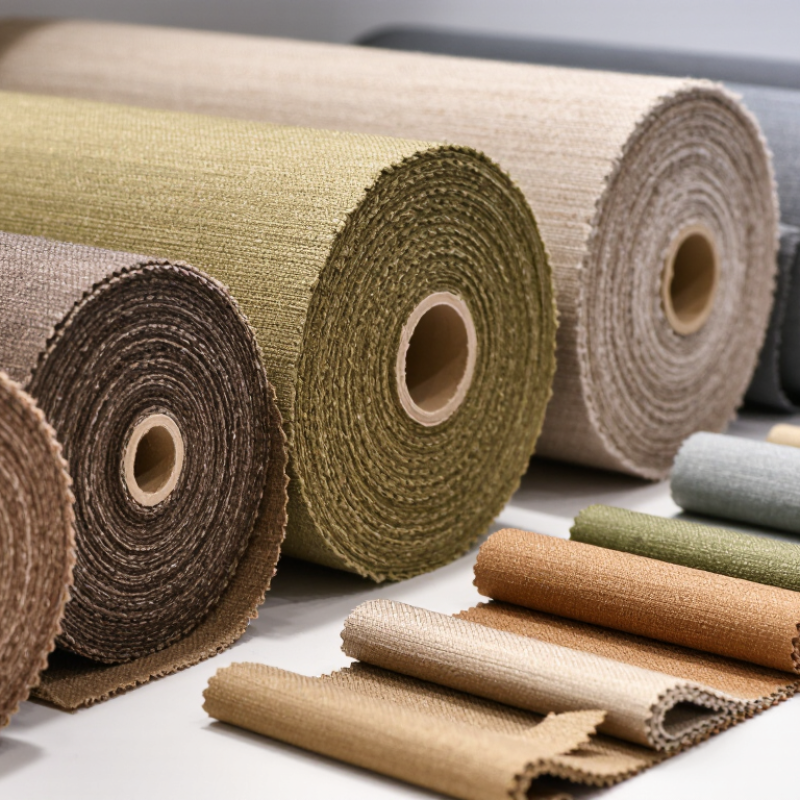
2026 Best Recycled Canvas Fabric for Global Buyers?

Define Recycled Canvas by Fiber Mix, Weave, GSM, and Surface Finish

2026 Best Recycled Canvas Fabric for Global Buyers?

Define Recycled Canvas by Fiber Mix, Weave, GSM, and Surface Finish

Recycled canvas is not one fixed fabric. Its performance depends on the fiber mix. Recycled cotton gives a dry hand and natural variation, while recycled polyester improves strength and drying speed. Blends often offer better balance. Textile Exchange’s Materials Market Report 2024 recorded 124 million tonnes of global fiber production in 2023, with recycled fibers representing about 7.6%. The figure is useful, but recycled content claims still need transaction records and certification evidence.

Weave changes the fabric’s behavior. Plain-weave canvas feels stable and clean, while duck canvas uses tighter construction for heavier wear. For bags and work aprons, buyers often compare 280–450 GSM. Outdoor covers may require 500 GSM or more. Higher GSM is not automatically better. It can increase shipping weight and reduce flexibility. I have seen samples that felt strong but failed seam testing. A simple tensile test is not enough; check tear strength, seam slippage, shrinkage, and color rubbing.

Tips: Request a full specification sheet showing fiber percentages, yarn type, weave density, GSM tolerance, and finish chemistry. Compare uncoated, waxed, calendared, and water-repellent surfaces under real use. Coatings can improve resistance, but they may change recyclability and hand feel. The European Environment Agency has repeatedly highlighted textile durability as a key factor in reducing environmental impact. That suggests a practical question: will the finish extend service life, or only improve the first impression?
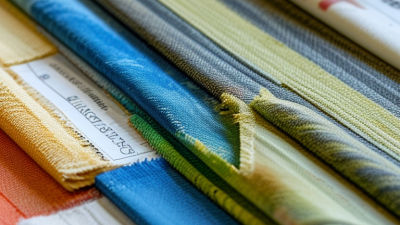
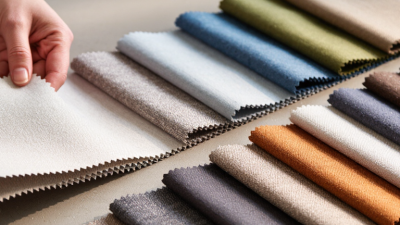
2026 Best Recycled Canvas Fabric for Global Buyers?

Define Recycled Canvas by Fiber Mix, Weave, GSM, and Surface Finish

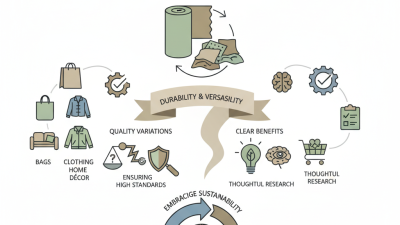
The chart compares representative recycled canvas specifications by fiber mix and weave. Plain canvas commonly falls around 240–300 GSM, twill canvas around 300–360 GSM, and tightly woven duck canvas around 360–430 GSM. Actual weight can vary according to yarn count, finishing process, and production tolerance.

Fiber mix:
Recycled cotton provides a natural hand feel, while recycled polyester improves strength, abrasion resistance, and dimensional stability.
Weave:
Plain weave is versatile, twill offers a softer drape and diagonal texture, and duck canvas delivers a dense, durable construction.
GSM:
Higher GSM generally indicates a heavier and more durable fabric, but it may also reduce flexibility and increase shipping weight.
Surface finish:
Uncoated finishes preserve breathability, calendering creates a smoother surface, and wax or acrylic coatings improve water resistance.

Values shown are industry-typical specification benchmarks for recycled canvas sourcing and are not associated with any specific company or brand.

Map Global Supply Using Textile Exchange’s 124 Mt Fiber Baseline for 2023

2026 Best Recycled Canvas Fabric for Global Buyers?

Textile Exchange’s 124 million metric tonne fiber baseline for 2023 gives buyers a useful global reference. It shows the scale of material production, but it is not a canvas-specific figure. Recycled canvas remains a smaller, more specialized segment within this wider fiber system. The baseline helps compare market direction. It does not prove that a supplier has stable recycled input.

For global sourcing, buyers should map fiber origin, recycling method, and factory capacity together. Ask whether the canvas uses recycled cotton, recycled polyester, or a blended structure. Request test reports for tear strength, abrasion resistance, colorfastness, and shrinkage. A dense 12-ounce canvas may feel firm in the hand, while a lighter fabric can fold more easily but wear sooner. Small differences matter during sampling.

Documentation needs careful review. Recycled content claims should match purchase records, production batches, and shipment data. Independent verification adds confidence, though paperwork can still contain gaps. That is an uncomfortable point. A supplier may provide excellent samples but lack consistent monthly volume. Another may offer reliable capacity but limited color flexibility. Buyers should test repeat orders, not only first samples. The 124 Mt baseline offers context, yet local factory evidence remains essential for judging real availability in 2026.

Verify RCS’s 5% and GRS’s 20% Minimum Recycled-Content Thresholds

For global buyers in 2026, recycled canvas selection starts with content verification. The Recycled Claim Standard requires at least 5% recycled material. The Global Recycled Standard requires at least 20%. These thresholds are not interchangeable. A fabric labeled “recycled” may still contain a small recycled portion.

Ask suppliers for a valid certificate, scope details, and transaction records. Check whether the certificate covers yarn, weaving, dyeing, and finishing. A 20% claim can fail if only the yarn stage is certified. Request the fiber source, recycled percentage, fabric weight, weave structure, and test reports. A production sample should match the approved specification. It often does not.

Tips:

Compare the certificate holder with the actual manufacturer. Confirm the certificate dates before placing an order. Keep sealed fabric swatches for inspection.

Ask how mixed fibers are calculated. Do not rely on logos alone.

A lower threshold may suit a basic tote, but it may not satisfy your sustainability target. A higher threshold can increase cost, reduce color options, or affect abrasion performance.

In practice, buyers sometimes focus on the percentage and overlook durability. That is a mistake worth reconsidering.

Request independent testing when the order is large or the claim seems unusually precise.

Compare ISO 12947 Abrasion, Tear Strength, GSM, and Colorfastness Data

For 2026 recycled canvas purchasing, performance data matters more than recycled content claims. Textile Exchange’s Materials Market Report 2024 recorded global fiber production at about 124 million tonnes in 2023. Recycled fibers represented roughly 7.6% of that volume. The share is growing, but quality still varies between mills.

Ask for ISO 12947 abrasion results from the exact fabric construction. A 10–14 oz canvas usually equals about 340–475 GSM. For bags and work aprons, 20,000–40,000 Martindale cycles can be a practical screening range. Heavy-use products may need more. ISO 12947 is a test method, not a universal pass-or-fail rule. That detail is often missed. Tear strength should be checked under ISO 13937-2, with 30–60 N as an indicative buying range for medium-weight canvas. Seam design can still fail first.

Colorfastness requires separate evidence. Look for ISO 105-C06 washing results at grade 4 or above, plus ISO 105-B02 lightfastness data for outdoor exposure. GSM must remain consistent across rolls; a 5% variation can affect cutting and product weight. In my fabric reviews, recycled yarns sometimes produce subtle slubs and shade differences. They are not always defects, but they require approval swatches. One laboratory report is never enough. Request testing after finishing, not only before dyeing.

Rank 2026 Suppliers by Traceability, MOQ, Lead Time, and Landed Cost

2026 Best Recycled Canvas Fabric for Global Buyers?

For 2026, global buyers should rank suppliers by traceability, MOQ, lead time, and landed cost. Request fiber-origin records, recycling-process details, transaction certificates, and batch-level test reports. Do not accept a generic sustainability PDF. Evidence matters. Score each supplier using the same checklist. Give traceability the highest weight, because unclear fiber content can create compliance and quality risks.

MOQ should match your sales forecast, not merely factory capacity. A flexible supplier may accept 500 meters, while another requires 3,000 meters. Lead time also needs separate scores for sampling, production, and shipping. Seven-day sampling sounds attractive, but bulk production may still require 30 to 45 days. Landed cost includes fabric price, testing, packaging, freight, insurance, duties, and local handling. A cheaper quotation can become expensive at the warehouse door.

Tips: Ask for a physical swatch, GSM report, colorfastness results, and a written production schedule. Compare at least three quotations under identical delivery terms. Check whether recycled content changes after dyeing or finishing. In my experience, suppliers with perfect spreadsheets still need practical verification. One overlooked port delay can damage the ranking. Recheck assumptions before placing a seasonal order.

2026 Best Recycled Canvas Fabric for Global Buyers? — Ranked 2026 Supplier Profiles by Traceability, MOQ, Lead Time, and Landed Cost
Rank Anonymous Supplier Profile Primary Production Region Recycled Canvas Construction Traceability Evidence Traceability Score Typical MOQ Bulk Lead Time Indicative Landed Cost* Quality & Compliance Risk Best Buyer Fit
1 Profile A — Integrated Certified MillVertically coordinated spinning, weaving, dyeing and finishing Türkiye / Mediterranean supply corridor 60% recycled cotton / 40% conventional cotton; 320–360 GSM; 150 cm width Transaction certificates, batch-level material records, yarn-to-fabric lot mapping, chemical-management documentation Very High
9.2 / 10
1,000–2,000 m per colour 5–7 weeks USD 5.10–6.40/mEU port; indicative duty, freight and handling included Low EU brands requiring documented recycled content and stable repeat orders
2 Profile B — Recycled Polyester Canvas SpecialistHigh-volume synthetic recycling and coating capability China / East Asia 100% recycled polyester; 280–420 GSM; optional PU or acrylic coating GRS/RCS-type chain-of-custody documentation, polymer feedstock declarations, production lot records Very High
9.0 / 10
500–1,000 m per colour 4–6 weeks USD 3.85–5.20/mEU port; indicative duty, freight and handling included Medium-Low Outdoor, bag and footwear buyers prioritising abrasion resistance and scale
3 Profile C — Recycled Cotton Circularity MillMechanical fibre recovery with low-impact finishing options India / South Asia 50–70% post-industrial recycled cotton blend; 300–380 GSM; natural or pigment dyed Supplier declarations, fibre-content testing, spinning records and selected third-party transaction evidence High
8.4 / 10
800–1,500 m per colour 6–8 weeks USD 3.45–4.75/mEU port; indicative duty, freight and handling included Medium Home-textile, tote and lifestyle-product buyers seeking lower material cost
4 Profile D — Regional Nearshore ConverterOutsourced recycled yarn with local weaving and finishing Portugal / Western Europe 30–50% recycled cotton or recycled polyester blend; 280–340 GSM Supplier chain mapping, fibre certificates from upstream mills, dye-house and finishing records High
8.1 / 10
300–700 m per colour 3–5 weeks USD 6.20–8.10/mEU delivery; shorter inland transit and lower coordination risk Low European SMEs needing smaller MOQs, faster sampling and responsive replenishment
5 Profile E — Large-Scale Blended Canvas MillBroad colour library and high production capacity China / Southeast Asia Recycled polyester/cotton blends; 260–400 GSM; water-repellent options Product-level certification copies, production records and pre-shipment inspection; limited fibre-lot visibility Medium-High
7.7 / 10
1,000–3,000 m per colour 5–8 weeks USD 3.60–5.00/mEU port; indicative duty, freight and handling included Medium High-volume private-label and promotional-product programmes
6 Profile F — Certified Export Trading NetworkMulti-mill sourcing model with central export coordination South Asia / Southeast Asia Recycled cotton, recycled polyester and mixed-fibre constructions; 250–380 GSM Document package available on request; traceability depends on the selected manufacturing mill Medium
7.1 / 10
500–1,000 m per colour 6–9 weeks USD 3.30–4.80/mEU port; cost varies materially by selected mill and shipment size Medium Buyers comparing multiple constructions through one commercial contact
7 Profile G — Small-Batch Sustainable WorkshopFlexible development, limited capacity and narrower colour range South Asia / Mediterranean region 20–40% recycled cotton blend; 280–340 GSM; small-run dyed canvas Supplier declarations, test reports and purchase records; limited upstream chain-of-custody detail Medium
6.6 / 10
150–400 m per colour 7–10 weeks USD 5.40–7.60/mEU delivery; small-volume freight and setup costs included Medium-High Independent brands, sampling programmes and limited seasonal collections
8 Profile H — Low-Cost Commodity ConverterPrice-led sourcing with variable recycled-content availability South Asia / East Asia Recycled polyester or cotton blend; 240–360 GSM; standard construction range Basic supplier declaration and commercial test report; batch-level verification should be requested Limited
5.8 / 10
1,000–2,500 m per colour 8–12 weeks USD 3.00–4.40/mEU port; lowest quoted cost but higher verification and delay exposure High Cost-sensitive buyers with in-house testing and flexible delivery schedules
Benchmark basis: This table uses anonymised supplier profiles and indicative 2026 planning ranges rather than company or brand claims. Landed-cost estimates assume 300–350 GSM fabric, approximately 150 cm width, a 1,000 m commercial order, shipment to an EU port, standard ocean freight, and normal import handling; destination duty, VAT, coating, testing, custom packaging and inland delivery can change the final figure. Certification should be verified through current transaction certificates and batch records before purchase. Traceability criteria are aligned with commonly used recycled-material chain-of-custody practices such as GRS/RCS-style documentation.