Top 10 Elastic Tulle Fabric Suppliers Worldwide?
Choosing the right Elastic Tulle Fabric supplier can shape an entire fashion collection. It affects comfort, stretch recovery, appearance, and production consistency. A soft bridal veil, a dance costume, and a performance garment may require very different fabric qualities.
This guide examines ten recognized suppliers serving international buyers. The review considers fabric composition, elasticity, mesh stability, color options, minimum order quantities, and sampling support. It also looks at practical details, such as roll packaging, lead times, and communication during development. These factors matter when fabric must survive repeated movement, careful cutting, and industrial sewing.
Technical claims should be verified.
Where possible, buyers should request swatches, test stretch after washing, and confirm fiber content through supplier documentation. Certifications can support responsible sourcing, but they should be checked for scope and validity. Supplier websites may present limited information, so direct questions remain important. No list is perfect. Rankings can change with capacity, pricing, regional logistics, and customer service.
The selected companies represent different strengths. Some focus on fashion textiles, while others offer custom dyeing, printed mesh, or large-scale manufacturing. A supplier with attractive pricing may not provide the best sample service. Another may deliver excellent quality but require higher order volumes. This comparison aims to offer a realistic starting point for designers, wholesalers, and purchasing teams seeking dependable Elastic Tulle Fabric for professional applications.
Definition and Key Characteristics of Elastic Tulle Fabric
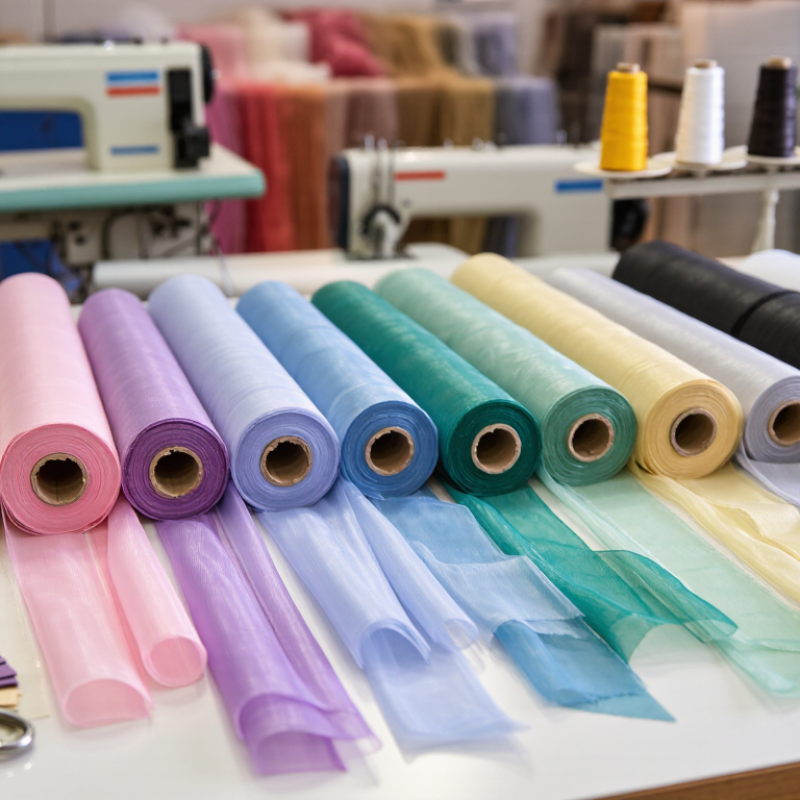
Elastic tulle fabric is a lightweight, open-mesh textile with controlled stretch and visible transparency. It usually combines nylon or polyester with elastane, creating flexibility without losing its net-like structure. Its softness, recovery, drape, and resistance to snagging vary with yarn quality, mesh size, and finishing methods.
The Textile Exchange Materials Market Report 2024 reported global fiber production of about 124 million tonnes in 2023. Polyester represented approximately 57% of that volume, supporting its wide use in stretch mesh production. However, fiber volume does not prove fabric performance. A practical check is essential.
Pull a 10-centimeter sample gently, observe its extension, then release it. Good elastic tulle should recover smoothly, without permanent waviness.
Key characteristics include stretch direction, elongation, recovery, weight, transparency, colorfastness, and edge stability. Some fabrics stretch only across the width, while others offer four-way movement. Fine mesh feels softer, but it may snag more easily during sewing or repeated wear. Heavier mesh can provide better support, though it may reduce drape.
A supplier’s specification sheet should state fiber percentages and fabric weight. Yet wording can remain vague. “High stretch” is not a complete technical description. Buyers should request test results, sample rolls, and washing evaluations before making decisions. This step is often overlooked, and that remains a practical weakness in textile sourcing.
Top 10 Elastic Tulle Fabric Suppliers by Product Range and Expertise
The top 10 elastic tulle fabric suppliers stand out through product range and technical expertise, not catalog size alone. Their collections typically cover nylon, polyester, spandex blends, recycled yarns, glitter tulle, flocked mesh, and soft bridal constructions. Grand View Research reports that synthetic fibers remain the dominant textile group worldwide, supporting strong demand for lightweight stretch fabrics. However, fiber volume does not guarantee quality.
The strongest suppliers serve distinct applications. Some specialize in bridal veils and layered skirts, while others develop lingerie mesh, dancewear, costume fabrics, or medical-support textiles. Useful selection criteria include stretch percentage, recovery after repeated movement, fabric width, GSM, shade consistency, and minimum order quantity. Intertek and SGS testing frameworks commonly assess colorfastness, fiber composition, seam performance, and harmful-substance compliance. A reliable supplier should provide recent test records, physical samples, and clear production tolerances.
SUSTAINABILITY
Sustainability now influences the shortlist. Textile Exchange’s Materials Market Report 2024 identifies polyester as the largest single fiber category, while recycled-polyester adoption continues to grow. Yet recycled content can reduce softness or recovery when poorly engineered. That detail matters. The best suppliers explain these trade-offs honestly and offer development samples before bulk production. No ranking is perfect. A supplier with excellent bridal tulle may lack the precision needed for high-recovery dancewear. Buyers should compare ten candidates through wash testing, stretch testing, and real garment trials, rather than trusting photographs or broad product claims.
How to Select the Right Elastic Tulle Fabric Supplier
How to Select the Right Elastic Tulle Fabric Supplier
Choosing among the top elastic tulle fabric suppliers worldwide requires more than comparing prices. Start with the fabric’s actual performance. Ask for samples in several weights, colors, and stretch directions. Measure recovery after repeated stretching, not only the initial elasticity. A soft roll can still lose shape after sewing.
Check the supplier’s technical records carefully. Reliable suppliers should provide fiber composition, fabric width, weight tolerance, and finishing details. Request test reports for colorfastness, shrinkage, abrasion, and tensile strength. Production traceability also matters. Lot numbers, inspection records, and clear packing details reduce avoidable surprises.
Communication reveals practical experience. Ask how the supplier handles uneven mesh, edge curling, and small shade differences. Their answers should be specific, not copied from a sales sheet. Confirm minimum order quantities, sample timing, lead times, and replacement procedures in writing. I once judged a supplier by fast replies and attractive samples. The bulk shipment exposed inconsistent stretch. My shortlist was too narrow.
A dependable partner should explain limitations honestly. No fabric performs perfectly in every garment. Test the material with your real pattern, thread, needle, and washing process. Keep a retained sample from each approved lot. This simple habit supports quality checks months later. If a supplier avoids testing or cannot identify production details, continue looking. Reliable performance matters more than impressive claims.