Leave Your Message
China has become a major sourcing base for Microfiber Stretch Fabric, serving sportswear, lingerie, swimwear, uniforms, and seamless apparel brands. Its strongest manufacturers combine fine denier yarns, controlled elastane ratios, stable knitting, and precise finishing. However, factory capability can vary sharply. A polished website proves very little.
Dr. Subramanian Senthilkannan Muthu, a widely published textile sustainability researcher, observes, “Fabric performance must be judged across its entire life cycle.” This principle matters when comparing Chinese suppliers. A fabric may feel soft in a sample room, yet lose recovery after repeated washing. It may also show uneven dyeing under strong retail lighting. Small details become expensive problems.
This guide examines leading Microfiber Stretch Fabric manufacturers through practical sourcing criteria. These include fiber composition, GSM accuracy, stretch and recovery, colorfastness, pilling resistance, moisture management, lead time, and quality control. We also consider OEKO-TEX certification, wastewater practices, traceability, and export experience. Not every established factory is the right partner. Sometimes, a smaller mill provides better communication and faster sampling.
Buyers should request laboratory reports and production samples. Test the fabric after washing, stretching, and drying. Touch alone is insufficient. That is the uncomfortable part. Supplier rankings can never replace independent verification. Prices may look attractive, but inconsistent width or shrinkage can damage an entire collection. The manufacturers discussed here are selected for measurable performance, manufacturing experience, and communication reliability, while recognizing that no supplier remains perfect in every category.
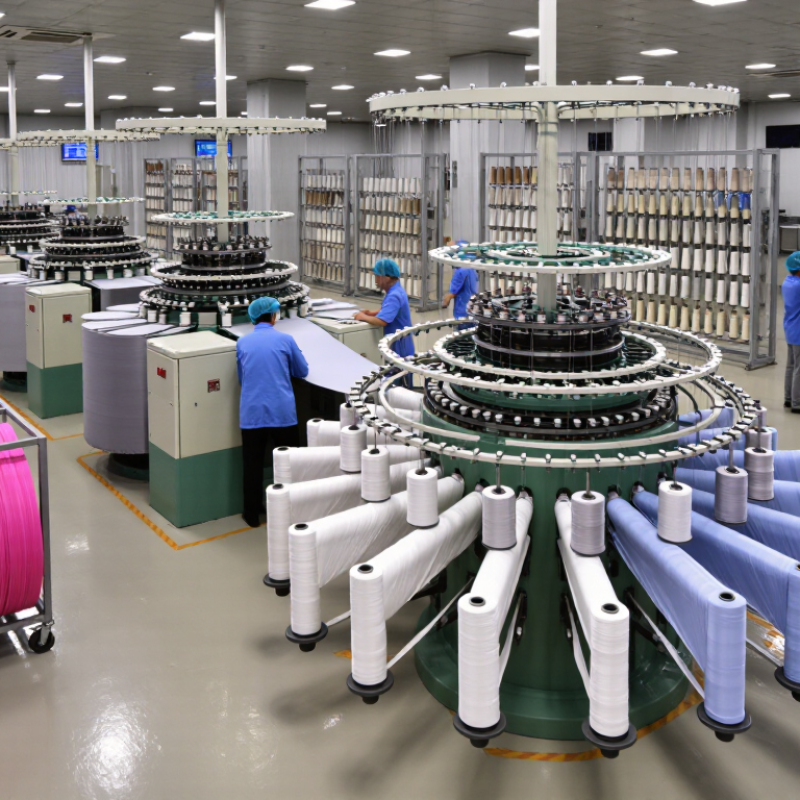
Microfiber Defined: Fibers Below 1 Denier and Common Fabric Structures
In microfiber stretch fabric, “microfiber” usually refers to individual filaments below one denier. Denier measures fiber mass per length, not its diameter. A lower denier often creates a finer hand, though yarn construction and finishing also affect softness. Polyester and polyamide are common choices. Run a swatch between your fingers: a smooth, cool touch can signal a fine surface, but feel alone cannot confirm fiber size.
Fabric structure matters just as much. Knits stretch through loop formation, making them useful for fitted sportswear and flexible linings. Warp knits can feel stable while still bending comfortably. Woven microfiber relies on interlaced yarns; added elastane can provide stretch, usually with less give than many knits. Brushed or peach-finished surfaces may feel soft, but can change how the fabric handles moisture and wear. Small differences matter.
Tips: Ask manufacturers for filament denier, fiber composition, stretch recovery, and a physical sample. Check the fabric after repeated stretching and washing. Specifications help, but they do not replace testing. And “microfiber” is sometimes used loosely in sales descriptions, so verify the details before comparing fabrics.
| Fabric or Fiber Category | Typical Specification | Common Structure | Stretch Characteristics | Typical Properties and Uses | Key Sourcing Checks |
|---|---|---|---|---|---|
| Microfiber definition | A microfiber is generally defined as a fiber finer than 1 denier per filament (dpf). Denier measures the mass in grams of 9,000 meters of filament. | Can be used in woven, knitted, and nonwoven fabrics. | Fiber fineness alone does not determine stretch; elasticity depends on yarn, fabric construction, and any elastomeric component. | Fine filaments can create a soft hand and a large surface area relative to the fiber mass. | Confirm whether the stated denier is per filament or per yarn, and request the supplier’s test method and specification. |
| Polyester microfiber woven fabric | Often made with continuous-filament polyester yarns below 1 dpf; actual yarn count and filament count vary by product. | Plain, twill, satin, or other woven constructions. | Usually limited mechanical stretch unless the fabric includes elastane or uses a stretch yarn or construction. | Used in apparel linings, outerwear, sportswear, bags, and cleaning textiles, depending on weight and finish. | Check fiber composition, fabric weight, width, weave, finish, colorfastness, and whether stretch is required in one or both directions. |
| Polyester–polyamide split microfiber | Made from composite filaments that are split into finer segments during processing; exact blend ratios and fineness depend on the product. | Commonly woven or knitted, sometimes with a raised or brushed surface. | Stretch varies with construction; elastane may be added when greater recovery is needed. | Fine, split filaments can support absorbent and soft surfaces used in cleaning cloths, garments, and synthetic suede-like materials. | Ask whether splitting is completed, verify composition and surface finish, and test absorbency, shedding, abrasion, and laundering performance for the intended use. |
| Microfiber warp-knit fabric | Fine-filament polyester or polyamide yarns; fabric weight and gauge are selected for the end use. | Tricot, raschel, and other warp-knit structures. | Can have useful dimensional stability; stretch and recovery depend on stitch design and whether elastane is incorporated. | Used in sportswear, linings, lingerie, and lightweight apparel fabrics. | Request stretch and recovery results in both directions, along with weight, width, snagging, and dimensional-change data. |
| Microfiber circular-knit fabric | Fine-filament polyester or polyamide yarns, sometimes blended with elastane. | Single jersey, interlock, rib, or other circular-knit constructions. | Knitted loops provide mechanical extensibility; elastane can increase stretch and recovery. | Used in activewear, base layers, casual apparel, and close-fitting garments. | Check composition, stitch construction, weight, width, pilling, recovery, and performance after repeated washing. |
| Microfiber stretch woven | Fine-filament polyester or polyamide combined with elastane, or designed with mechanical stretch. | Commonly plain or twill weaves, with stretch yarns in the weft, warp, or both directions. | May provide two-way or four-way stretch; the description should be confirmed by test results rather than assumed from the product name. | Used in stretch trousers, uniforms, sportswear, and lightweight outdoor apparel. | Specify stretch percentage and recovery method, elastane content, fabric weight, durability, and care requirements. |
| Microfiber nonwoven | Fine synthetic fibers formed into a web and bonded mechanically, thermally, or chemically. | Spunbond, meltblown, or other nonwoven processes; not a woven or knitted structure. | Stretch is generally limited unless the web or material is specifically engineered for extensibility. | Used in filtration, wipes, hygiene products, and selected technical applications. | Confirm the nonwoven process, basis weight, bonding method, filtration or absorbency requirements, and applicable end-use standards. |
| General quality and compliance checks | Requirements depend on destination market and end use. | Apply checks appropriate to the finished fabric and its construction. | Test stretch, growth, and recovery when these are performance requirements. | Common checks include composition verification, colorfastness, pilling, abrasion, dimensional stability, and restricted-substance screening where applicable. | Agree on test methods, acceptance limits, sample approval, inspection stages, and documentation before production. |
Specifications and performance vary by yarn, construction, finishing, and test method. Confirm product details with the supplier and evaluate samples against the intended end use.